
Campus Security in Malaysia: Why Faster Emergency Response Matters
Campus security has become a growing priority for universities and colleges across Malaysia. As campuses become larger and security risks become more complex, faster emergency response is no longer optional but it is essential for protecting students, staff, and university assets.
In today’s environment, relying solely on traditional guard patrols and manual reporting is no longer enough. Universities need a smarter and faster way to respond to emergencies before situations escalate.
This is where a campus security system plays a critical role.
A modern campus security system does more than monitor entrances or record CCTV footage. It enables real-time communication, incident tracking, faster emergency coordination, and better protection for students, staff, and university assets.
In this article, we explore why faster emergency response matters and how Malaysian campuses can strengthen safety through smarter technology.
Why Campus Security Is Becoming More Important in Malaysia
Malaysia’s higher education institutions are growing rapidly. With thousands of students, lecturers, administrative staff, visitors, and contractors entering campuses daily, security management becomes more complex.
Large campuses often face challenges such as:
- Unauthorised visitors entering restricted areas
- Theft and vandalism incidents
- Student altercations or disturbances
- Medical emergencies
- Fire alarms and evacuation situations
- Safety concerns during large-scale campus events
Without proper systems, campus security teams may struggle to respond quickly. Delayed communication between security personnel can result in confusion, slower response times, and increased risks.
A well-designed campus security system helps universities manage these challenges more effectively by improving visibility and coordination across the campus.
Why Faster Emergency Response Matters on Campus
In emergencies, every second matters.
Whether it involves a medical incident, physical threat, suspicious individual, or fire evacuation, delayed response can worsen the outcome significantly.
1. Protecting Student and Staff Safety
The first responsibility of every university is protecting the wellbeing of students and employees.
Imagine a student collapsing due to a medical emergency in a remote part of campus. If information takes too long to reach the security team, valuable response time is lost.
A smart campus security system enables immediate reporting and alerts so response teams can be dispatched faster to the exact location.
Faster response can mean:
- Reduced medical complications
- Faster evacuation during emergencies
- Better crowd control
- Prevention of incidents from escalating
In many situations, speed directly impacts safety outcomes.
2. Reducing Security Risks Before They Escalate
Many campus incidents begin as small problems but become major issues due to delayed action.
For example:
- Suspicious behaviour near dormitories
- Unauthorized access into faculty buildings
- Student disputes becoming physical altercations
When reports are delayed or poorly communicated, campus officers lose valuable time.
By implementing a campus security system, universities can improve situational awareness and respond before problems become serious threats.
This proactive approach helps institutions maintain safer learning environments.
Common Weaknesses in Traditional Campus Security
Many campuses still rely on outdated processes such as:
Manual Radio Communication
Radio communication can be unreliable, especially during large emergencies where multiple officers are communicating at once.
Miscommunication may happen due to:
- Unclear locations
- Missed instructions
- Delayed updates
- Limited tracking of officer activity
Paper-Based Incident Reporting
Some campuses still document incidents manually.
This creates challenges such as:
- Slow reporting processes
- Missing information
- Difficulty tracking patterns of incidents
- Limited reporting transparency
Limited Visibility Across Campus
Security managers often lack real-time information on where officers are deployed.
This can lead to slower emergency response and inefficient patrol management.
A smarter campus security system solves these operational gaps by providing real-time monitoring and better communication between teams.
How Technology Improves Campus Emergency Response
Technology is changing how universities manage safety.
Modern campus protection solutions now combine several security tools into one connected platform.
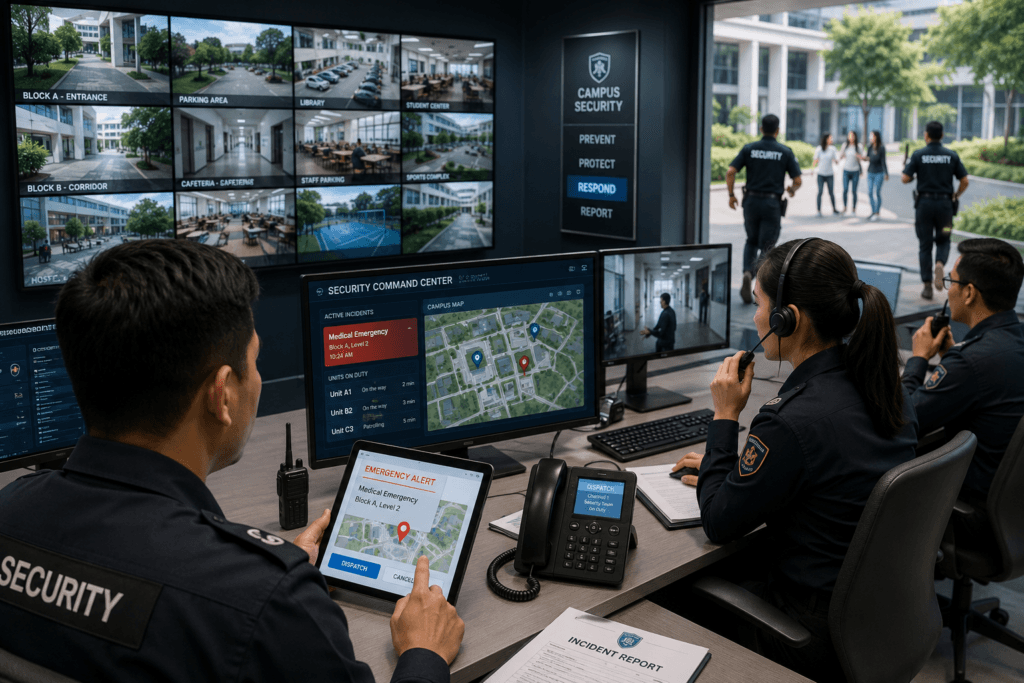
Real-Time Incident Reporting
Security officers can instantly report incidents directly from mobile devices.
This allows command centres to:
- Receive immediate alerts
- View incident details in real time
- Dispatch nearby officers faster
- Monitor progress of the response
A connected campus security system significantly improves response efficiency compared to traditional reporting methods.
GPS-Based Patrol Monitoring
Knowing officer locations matters during emergencies.
With GPS-enabled patrol tracking, security managers can identify:
- Nearest available officers
- Patrol completion status
- High-risk areas requiring attention
This ensures emergencies are handled faster and resources are allocated effectively.
Centralised Security Communication
Instead of relying solely on fragmented communication methods, modern systems centralise information in one platform.
This creates:
- Faster internal coordination
- Better documentation
- Clear incident records
- Improved accountability
For universities managing thousands of students, this level of visibility becomes increasingly important.
The Role of Emergency Response Systems in Modern Campuses
A modern university should not only focus on preventing incidents but also ensuring fast emergency response.
An effective emergency response system helps campuses react quickly during:
- Medical emergencies
- Security threats
- Missing persons cases
- Fires and evacuations
- Natural disasters
When integrated properly, these systems help reduce panic and improve coordination among campus personnel.
In Malaysia, universities are becoming more aware of the importance of investing in smarter safety infrastructure to meet modern expectations.
Why Universities Need Smarter Security Technology
Students and parents today expect campuses to provide safe environments.
Security is no longer viewed as an optional feature — it has become part of institutional trust and reputation.
A poor response during emergencies can negatively impact:
- University reputation
- Student confidence
- Parent trust
- Operational continuity
This is why more institutions are adopting security management software to streamline patrol operations, reporting, and emergency coordination.
A modern campus security system helps universities demonstrate stronger commitment toward campus safety.
Key Features to Look for in a Campus Security System
Not all systems provide the same benefits.
When choosing a campus security system, universities should prioritise features such as:
Real-Time Alerts
The ability to notify teams instantly during emergencies.
Patrol Monitoring
Track guard activities and improve accountability.
Incident Reporting
Digital reporting for faster and more accurate documentation.
Location Tracking
GPS functionality for quicker officer deployment.
Analytics and Reporting
Access to incident trends for better planning and prevention.
The right technology helps campuses shift from reactive security management to proactive risk prevention.
How Faster Emergency Response Improves Campus Confidence
Fast emergency response does more than reduce risks. It builds trust. Students feel safer attending classes. Parents gain peace of mind. University leaders gain better operational visibility.
When campuses invest in faster emergency capabilities through a reliable campus security system, they create safer educational environments that support student wellbeing and institutional growth.
Conclusion
Campus security in Malaysia is evolving.
As universities become larger and more complex, traditional security approaches may no longer be enough to address modern safety challenges.
Faster emergency response matters because delays can increase risks, worsen outcomes, and create unnecessary panic.
By adopting a smarter campus security system, universities can improve communication, strengthen coordination, and respond more effectively during emergencies.
For campus management teams, investing in faster emergency response is not only about technology — it is about protecting people, maintaining trust, and creating safer learning environments for everyone.
